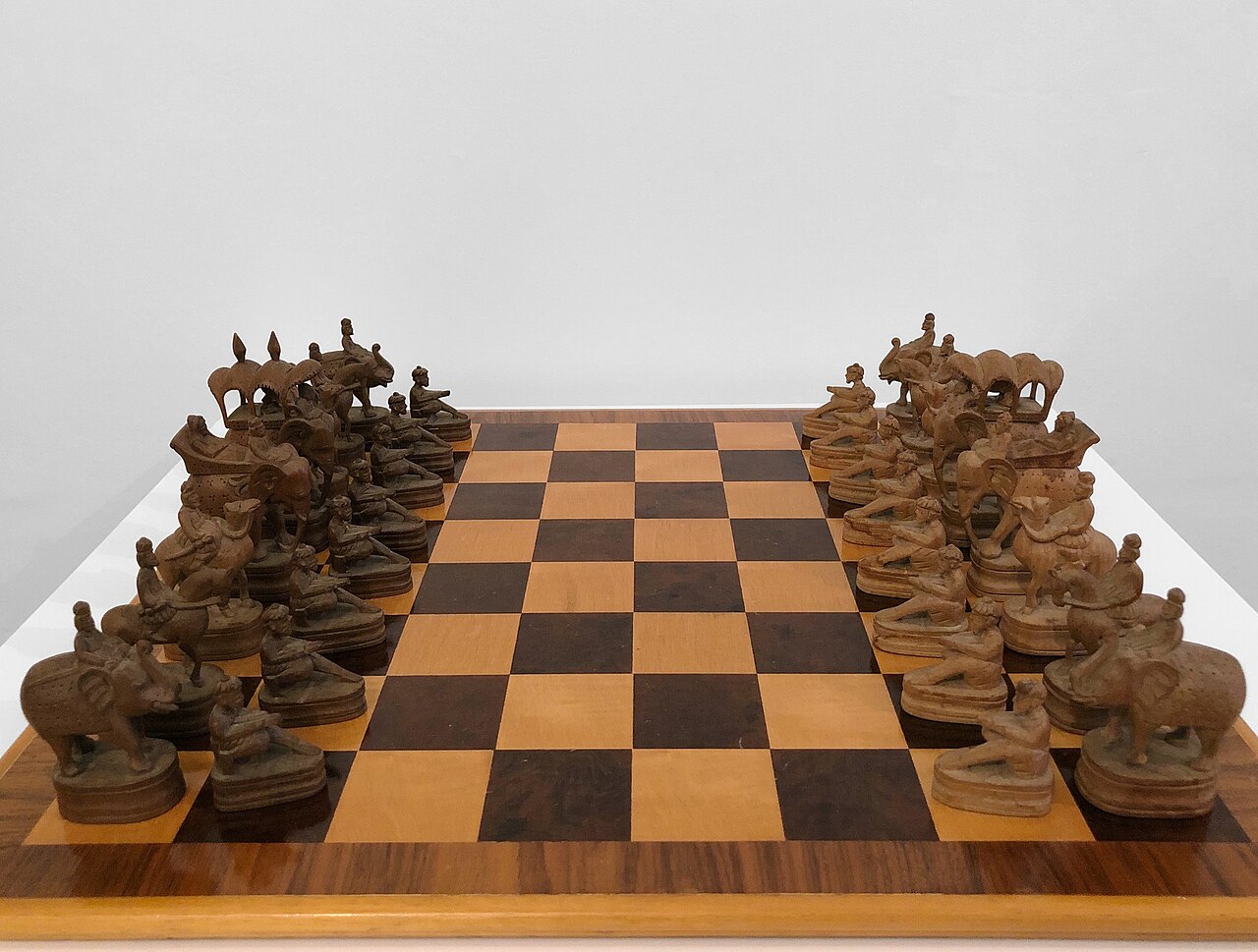
From Chaturanga to Modern Chess: A Journey Through History
Chess, a game synonymous with intellect, strategy, and foresight, captivates millions across the globe. Its intricate rules and endless strategic possibilities have made it a timeless pastime, a competitive sport, and even an art form. Yet, how many of us pause to consider its deep historical roots? Before the familiar black and white pieces and the formidable queen, there was an ancient ancestor, a game that laid the very foundation for what we know today. If you've ever wondered, What is the name of the game considered the oldest form of chess? The answer is Chaturanga: The Ancient Game Considered Chess's Ancestor – a fascinating precursor that emerged from the heart of ancient India.
This article embarks on a historical odyssey, tracing the remarkable evolution of chess from its earliest known form, Chaturanga, through its various transformations across continents and cultures, ultimately leading to the modern game we cherish today. We'll delve into its origins, explore its ancient rules, and understand how cultural exchanges shaped its destiny, turning a tactical war simulation into a universal language of strategy.
The Dawn of Strategy: Unveiling Chaturanga in Ancient India
The journey begins in the vast and ancient land of India, specifically around the 6th century CE. It was here, amidst a rich tapestry of philosophy and innovation, that Chaturanga first emerged. This game is widely accepted by historians and scholars as the direct progenitor of chess. The name itself, "Chaturanga," offers a profound insight into its essence and purpose. Derived from Sanskrit, "chatur" meaning "four" and "anga" meaning "parts, divisions, or limbs," it translates to "four-limbed army."
This designation was not merely symbolic; it was a direct reflection of the prevailing military organization of ancient India. Chaturanga represented the four fundamental units of an Indian army: the infantry (foot soldiers), cavalry (horsemen), elephants, and chariots. Each piece on the board was meticulously designed to symbolize these military components, embodying their roles and movements in battle. Consequently, Chaturanga was more than just a recreational game; it served as a sophisticated simulation tool, a tactical blueprint for developing and honing war strategies and military acumen. Players could test different maneuvers, understand the strengths and weaknesses of various units, and practice strategic thinking without the real-world consequences of actual combat. It was, in essence, an early form of war gaming, fostering intellectual development and strategic planning.
From Chaturanga to Shatranj: The Game's Eastern Odyssey
As empires rose and fell, and trade routes flourished, Chaturanga began its westward migration, carried by merchants, scholars, and diplomats. Its first significant transformation occurred as it reached the magnificent Persian Empire. Here, the game underwent a nomenclature change, becoming known as Shatranj. While retaining much of its core strategic identity, Shatranj began to evolve, influenced by Persian culture and military thought.
The adoption of Shatranj by the Islamic world following the Arab conquest of Persia marked a pivotal moment in its history. Islamic scholars and strategists embraced the game with fervor, recognizing its intellectual depth and its utility as a training ground for the mind. They meticulously studied its intricacies, documented its rules, and even composed numerous treatises and books dedicated to its strategies and openings. Tournaments were organized, and the game became a cherished intellectual pursuit among the elite and commoners alike. This period of intense study and popularization by Islamic civilization not only preserved Shatranj but also refined and enriched it. From the Islamic world, the game continued its journey, spreading across North Africa, through Al-Andalus (Islamic Spain), and eventually into the burgeoning kingdoms of Europe.
Rules of Engagement: Chaturanga's Unique Gameplay
While Chaturanga shares a striking resemblance to modern chess, particularly in its 8x8 square board, it possessed several distinct characteristics that set it apart. Understanding these differences is key to appreciating the game's evolutionary path. For a deeper dive into the mechanics, read Chaturanga Revealed: Origin & Rules of Ancient Chess.
Here’s a breakdown of its core elements and how they compared to their modern counterparts:
- The Board: An 8x8 uncolored board, similar to today's chessboards.
- Number of Players: While some historical accounts suggest an initial four-player variant potentially involving dice (which would make it a game of chance as much as skill), the predominant and most influential form of Chaturanga, and the direct ancestor of modern chess, was a two-player strategy game.
- Objective: Unlike modern chess where the objective is to checkmate the king, in Chaturanga, the primary goal was to capture the opponent's Raja (King). There was no concept of "check" or "checkmate" in the contemporary sense; a Raja under attack simply had to move to safety or be captured on the next turn.
- Piece Movements: The names and movements of the pieces tell a story of ancient warfare:
- Raja (King): Moved one square in any direction, identical to the modern king.
- Mantri (Vezir/Advisor): This piece is the ancestor of the modern queen, but its power was vastly different. The Mantri could only move one square diagonally in any direction. This severely limited mobility made the game much slower and positional than modern chess.
- Ratha (Savaş Arabası/Chariot/Rook): Moved any number of squares horizontally or vertically, mirroring the modern rook.
- Gaja (Fil/Elephant/Bishop): The ancient elephant's movement was quite unique. It could move two squares diagonally, jumping over any intervening piece. This meant a Gaja could only reach squares of the same color it started on and had a peculiar movement pattern different from the modern bishop.
- Ashva (At/Horse/Knight): Moved in an 'L' shape (two squares in one direction, then one square perpendicularly), identical to the modern knight, and could jump over other pieces.
- Padati (Piyade/Infantry/Pawn): Moved one square forward and captured one square diagonally forward, much like the modern pawn, but without the initial two-square move option.
The limited power of the Mantri and the unique movement of the Gaja meant that Chaturanga was a slower, more deliberate game, often characterized by strategic maneuvering and gradual development rather than rapid tactical assaults.
The Evolution Continues: From Shatranj to Modern Chess
As Shatranj journeyed into Europe, particularly during the late Middle Ages and the Renaissance, it encountered new cultures and interpretations, leading to its final, dramatic transformation into modern chess. The most significant changes occurred in the late 15th century, fundamentally altering the game's dynamics.
The most profound change involved the evolution of the Mantri and Gaja pieces. The modest Mantri, capable of only a single diagonal step, was transformed into the immensely powerful Queen, gaining the ability to move any number of squares horizontally, vertically, or diagonally. This single change revolutionized gameplay, introducing a new level of aggression, speed, and tactical complexity. Simultaneously, the Gaja evolved into the Bishop, shedding its two-square diagonal leap for the ability to move any number of squares diagonally, without jumping.
Other crucial modifications included:
- The introduction of the castling move, allowing the king to quickly reposition to safety while bringing a rook into play.
- The option for pawns to move two squares on their initial move, and the subsequent introduction of the en passant capture rule.
- The concept of stalemate, where a king not in check but with no legal moves results in a draw, rather than a loss.
These rule changes, largely standardized in the late 15th and early 16th centuries, transformed chess from a relatively slow, positional battle into the dynamic, tactical, and incredibly complex game we recognize today. The increased mobility of the Queen and Bishop drastically reduced game length and opened up vast new strategic possibilities, making chess faster, more exciting, and globally appealing. From a localized war simulation, it had morphed into an abstract battle of wits, transcending cultural boundaries to become a universal intellectual pursuit.
Conclusion
The journey from Chaturanga to modern chess is a testament to human ingenuity and the enduring power of intellectual games. From its humble beginnings in 6th-century India as the four-limbed army, Chaturanga laid the foundational principles of strategic board gaming. Its migration through Persia as Shatranj, and its subsequent refinement across the Islamic world and into Europe, highlights a remarkable story of cultural exchange and evolution. Each iteration, each modification to its rules and pieces, reflected the changing times and the collective desire to refine a perfect challenge for the mind. So, the next time you sit down to play a game of chess, remember its ancient lineage. Remember that What is the name of the game considered the oldest form of chess? is Chaturanga, the venerable ancestor whose spirit of strategy continues to inspire and challenge players across millennia.